Neighbourhood Guide
Italian Dining Culture
The story of Toronto's Corso Italia
A Legacy Built at the Table
The Origins of
Corso Italia
Before it became known as one of Toronto's most diverse corridors, St. Clair West — and more specifically Corso Italia — was a home away from home for thousands of Italian immigrants who arrived after World War II. They brought with them not just their language and customs, but their food: the kind that connects generations and brings people together around the table.
Corso Italia runs along St. Clair Avenue West between Lansdowne and Westmount Road, forming one of Toronto's earliest cultural districts. Over the decades, that legacy has shaped how the neighbourhood eats, shops, and gathers.
Today, even as new cultures and cuisines have joined the mix, the area's Italian influence remains unmistakable — from the aroma of espresso drifting out of bakeries to the Sunday bustle inside family-run restaurants.
A Tradition of Craft
Simple, Honest Food.
Made with Respect.
What makes Italian dining here special isn't extravagance — it's simplicity. Recipes are passed down quietly, techniques refined over time, and ingredients treated with respect. Olive oil instead of butter, slow simmering instead of shortcuts, and conversation as essential as the meal itself.
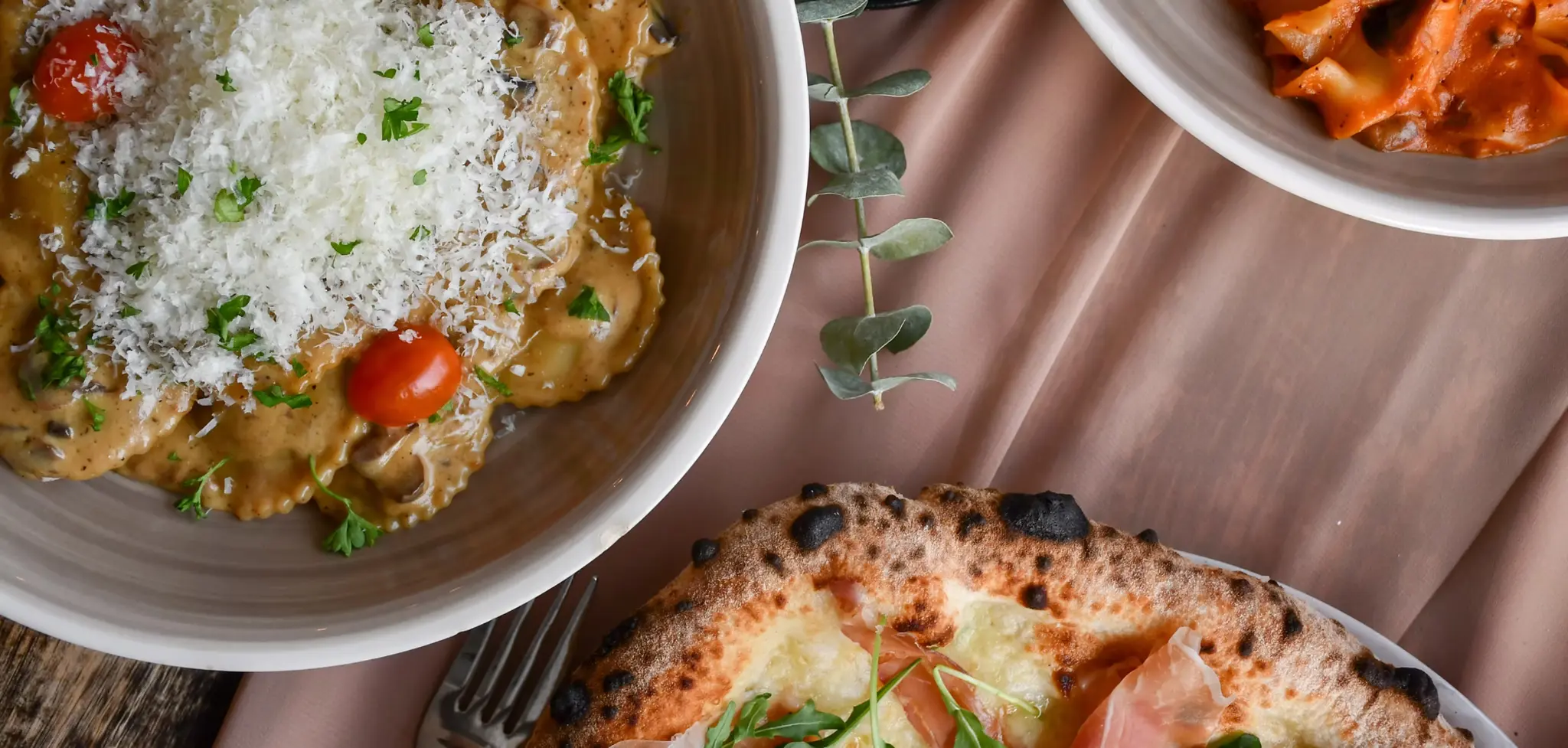
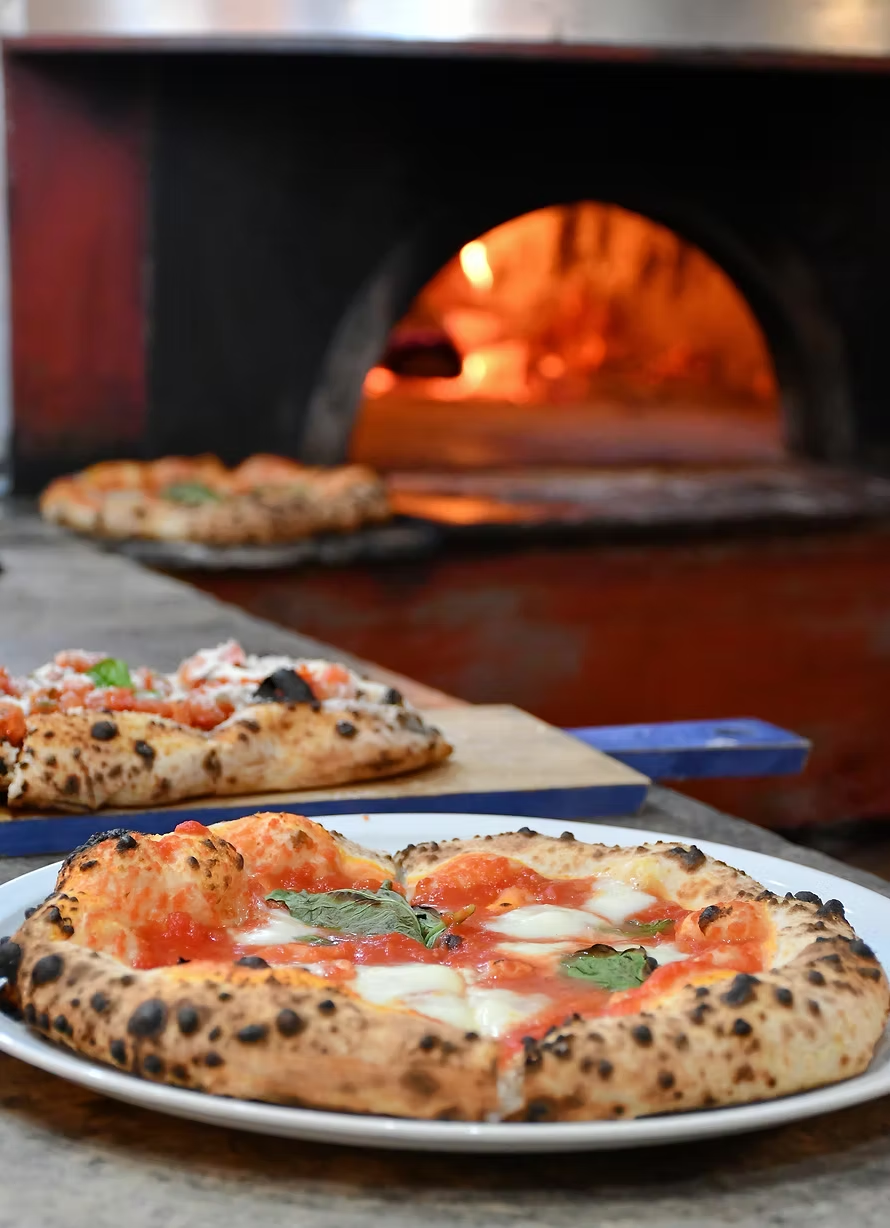
Many of the neighbourhood's kitchens still follow that rhythm. Fresh pasta is rolled in-house, dough ferments slowly, and sauces are made in small batches the same way they've been for generations. The emphasis has always been on quality over presentation, and that's what keeps locals loyal.
Pizza e Pazzi embodies this spirit — a name that has become synonymous with the real Italian dining experience on St. Clair West. Its roots, like the neighbourhood's, are grounded in family tradition and a respect for where good food comes from.
Our StoryBeyond the Plate
The Role of Food
in Community
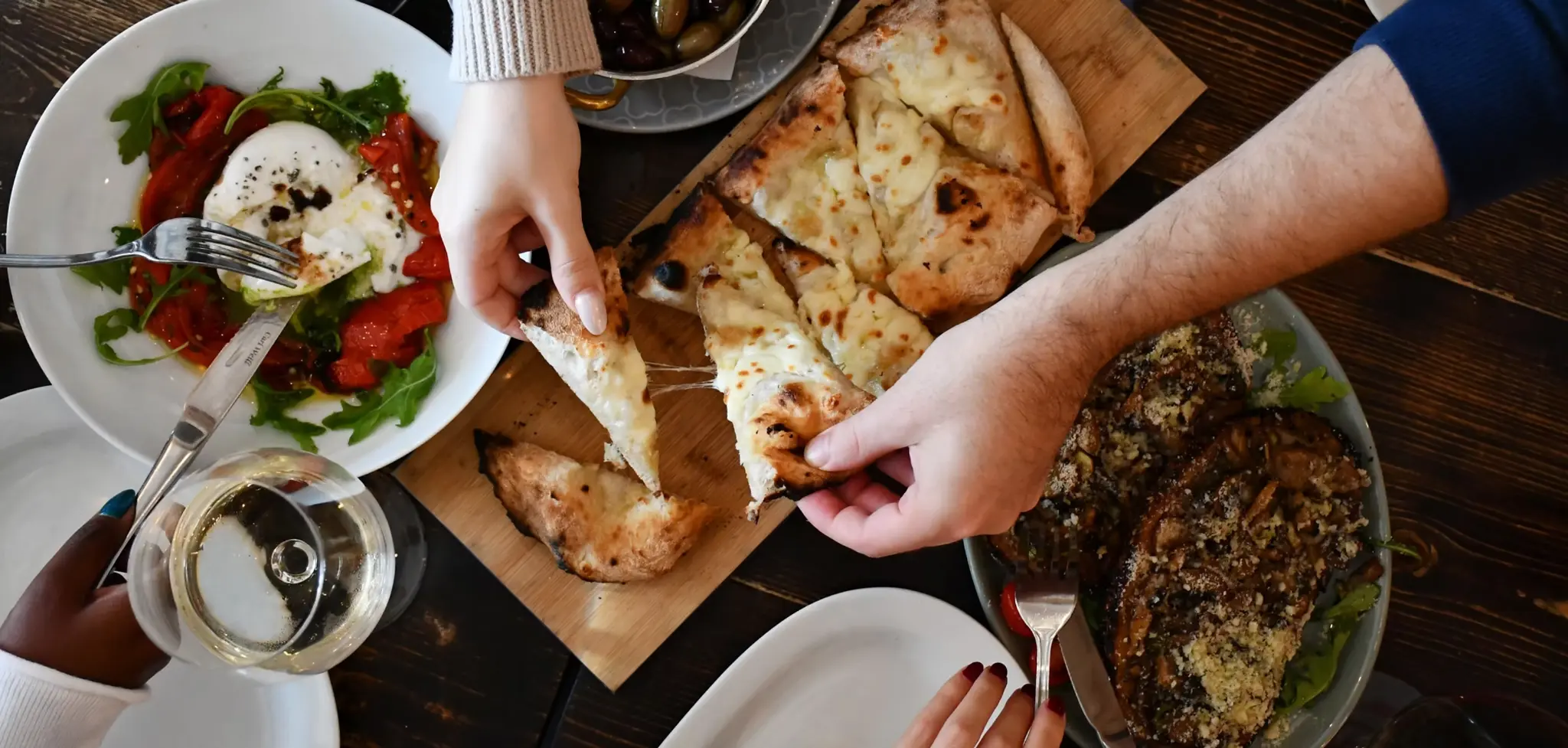
In Corso Italia, food is more than sustenance — it's storytelling. It's how families celebrate milestones, how neighbours connect, and how the culture stays alive in a changing city.
During summer, community events and street festivals still echo those early days when everyone gathered to share food outdoors. Even a quick espresso at the counter can turn into a conversation about soccer, travel, or memories of "back home." These everyday exchanges are what give the area its enduring warmth.
Walk into almost any café and you'll find regulars discussing the news over espresso or biscotti. On weekends, shoppers still carry home loaves of crusty bread from Tre Mari Bakery or jars of olives from small grocers that have been here for decades. It's a rhythm that hasn't disappeared — it's simply adapted.
Evolution & Tradition
The New Generation
of Corso Italia
While tradition remains the foundation, a new wave of chefs and restaurateurs is bringing fresh energy to St. Clair West. They blend old-world recipes with modern interpretations, creating a dialogue between heritage and innovation.
You'll find minimalist trattorias serving handmade pasta next to contemporary bars experimenting with Italian-inspired cocktails. Yet, even in these newer spaces, the essence of Corso Italia persists — hospitality first, quality always.
Italian dining culture on St. Clair West has lasted because it's genuine. It values connection over convenience, experience over speed. It's a reminder that meals are meant to be shared, that neighbourhoods grow stronger when people sit together at a table, and that authenticity never goes out of style.
Reserve a TableExperience It for Yourself
Come taste the tradition that has made Corso Italia a Toronto landmark for over 70 years.